Small Steps Nurture Change
If you think you are too small to make a difference, try sleeping with a mosquito.
― Dalai Lama

Melissa Kester, LMFT provides therapy for individuals, couples and adult family members in Washington, DC; Florida, and New York State. By looking into past and present relationships, we work to develop new patterns and capacities with our clients to allow them more fulfilling relationships.
We are a community of engaged and thoughtful, systemically trained practitioners. Melissa practices indepth psychotherapy that incorporates systemic, relational, contemplative and psychodynamic therapy.
If you think you are too small to make a difference, try sleeping with a mosquito.
― Dalai Lama
Infertility has been a rising concern for our friends, family members, and our communities. Dealing with infertility can be an extremely stressful and painful experience. It has become a frequent issue for many of my clients and I am frequently looking for ways to speak about this issue in ways that will be supportive.
During this journey, I came across an article from Resolve that helps us understand the do's and don'ts when speaking to someone who is experiencing infertility. The article states "Infertility is, indeed, a very painful struggle. The pain is similar to the grief over losing a loved one, but it is unique because it is a recurring grief."
I can only hope that as we navigate this issue in therapy, in our families and in our community, that we do so with respect and sensitivity to help ease the suffering for the people we so dearly care for.
Below is a link to the full article.
http://www.resolve.org/support-and-services/for-family--friends/infertility-etiquette.html
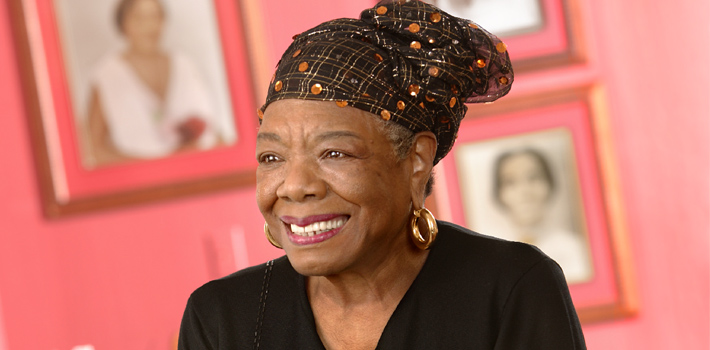
The great Maya Angelou.
Below is a link to some of Maya Angelous' beautiful words in honor of her spirit which has touched and inspired the world. Take a moment to enjoy her gifts.
http://www.mindbodygreen.com/0-802/7-Inspirational-Quotes-From-Maya-Angelou.html?utm_campaign=recommendation&utm_medium=popular&utm_source=feature
We have been told for years that money doesn't buy happiness, however, an article in mindbodygreen.com would disagree...
Read MoreIn Linda Graham's post about neuroscience and attachment, "The Neuroscience of Attachment," she discusses how our neurons form and how we relate to individuals from infancy into adulthood. Attachment theory has been the working model for many therapists, however, over the last 20 years due to huge technological break through's with brain imaging, we can now have an even deeper understanding of attachments and how we relate one another throughout the course of our lives. Graham writes,"Our earliest relationships actually build the brain structures we use for relating lifelong". What an amazing gift, to be able to understand human relational attachment not only through a psychological lens but a neuro-psychological lens.
Graham also writes, "Relating to one another, one on one, couples, families, or in larger social groups, is the most complex thing human beings do, more complex than writing a symphony or running a government or solving global warming, and the need to relate, to be emotionally and socially intelligent, has driven the evolution of the human brain to be the most complex of anything in all of existence." The neuropathways involved when relating to someone else are extremely complex and carry out many functions within a fraction of a second. So the next time you have a dialogue with a friend, family member, or partner, remember that there is more to the dialogue than just words.
Below is a link to Linda Grahams' article. Enjoy!
http://lindagraham-mft.net/resources/published-articles/the-neuroscience-of-attachment/
It is this vulnerability that causes our children to cling precisely when we need the most space. If we are sick or emotionally unavailable we may find our little ones acting out or holding on.
Read MoreKirby Lee, USA Today Sports
"Sport has the power to change the world," Mandela said. "It has the power to inspire. It has the power to unite people in a way that little else does. It speaks to youth in a language they understand. Sport can create hope where once there was only despair. It is more powerful than government in breaking down racial barriers."
Read MoreImage courtesy of jannoon028 / FreeDigitalPhotos.net
Adam Grant, a professor of psychology at Wharton School of the University of Pennsylvania, recently wrote “Raising a Moral Child,” for the New York Times Sunday Review. This article has been spreading to friends and family through social media and e-mail. It supports what we see so frequently in session; parents care about raising caring and just children. So how does one go about doing just that?
Grant states, “genetic twin studies suggest that anywhere from a quarter to more than half of our propensity to be giving and caring is inherited. That leaves a lot of room for nurture…” This leave parents with 75% of the morality lessons.
To read Grant’s article and learn some techniques for raising a moral child, click here.
You are amazing.
Read More